
From the Pharmacy Counter
Why Your Pill Looks Different This Month
The tablet you have taken for four years is suddenly a different color with a different imprint. What almost always happened, what the FDA requires to stay the same, how to check it yourself in thirty seconds, and the one case where the answer really is different.
Written for anyone who tipped out the bottle this morning and found a pill they did not recognise - their own, or a parent's.
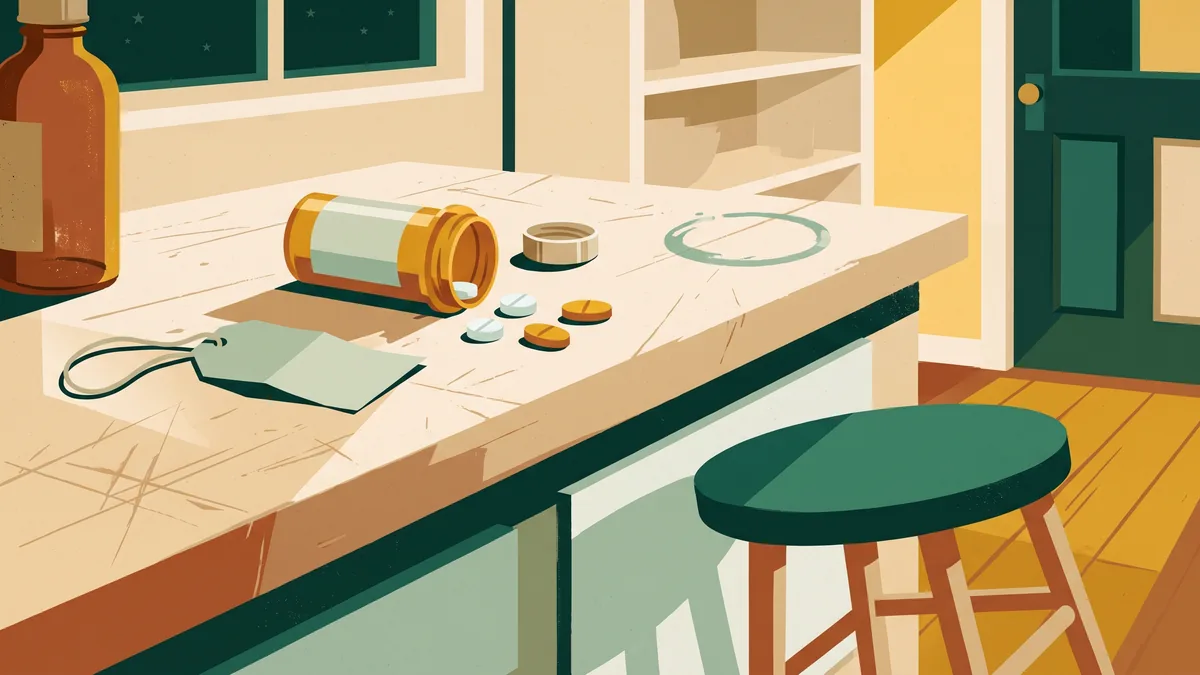
The bottle is right and the pill is wrong
You have taken the same tablet every morning for four years. It is white and round. This month you tip the bottle into your hand and it is yellow and oval, and there is a different set of letters stamped on it.
The first thought is always the same, and it is the correct instinct: somebody made a mistake.
Usually nobody did. But "usually" is not "certainly," and the thirty seconds it takes to be sure is time well spent. Here is what almost always happened, how to check it yourself, and the one situation where the answer is genuinely different.
What changed is the manufacturer, not the medication
A generic medication is made by more than one company. The drug is the same; the factory is not.
Which company's version sits on a pharmacy shelf in any given month is a purchasing question. Wholesaler availability moves, national supply of a given strength tightens and loosens, contracts turn over. When the pharmacy's usual source is short, the prescription gets filled with another manufacturer's version of the identical drug — and that company's tablet is a different color, a different shape, and carries a different imprint code.
Nobody chose it for medical reasons. Nobody chose it for you specifically. It is the same reason two cans of the same soup have different labels in two grocery stores.
What the FDA requires to stay the same
This is the part worth reading slowly, because it is the answer to the question you are actually asking.
The FDA's own description of a generic medicine is that "the active ingredient in the generic medicine is the same as in the brand-name drug," that "the generic medicine is bioequivalent to the brand-name medicine," and that it "has the same strength, dosage form (such as a tablet or an injectable), and route of administration (such as oral or topical)."
On the way it looks, the FDA says plainly that it "generally allows minor differences in appearance between generic and brand drugs, such as in color," and that "these minor differences do not affect how the medicine works."
So the yellow oval and the white round tablet are held to the same requirements on the things that determine what the medication does in your body. The color is not one of those things.
The honest part, which most articles skip
There is a second half to that, and the FDA says it too: "small, allowable differences between the products manufactured by different companies (such as in certain inactive ingredients) can sometimes feel noticeable to patients."
Inactive ingredients are the rest of the tablet — the binders, the fillers, the coating, the dye. They are not the drug, and they are permitted to differ between manufacturers.
If you switch manufacturers and something feels different to you, that is worth saying out loud rather than talking yourself out of. It is not a complaint and it is not a character flaw. It is information about you, and it goes to your pharmacist and your prescriber, who between them have more to work with than you might think — including, sometimes, the ability to request a particular manufacturer on future fills.
What that is not is a reason to stop taking it and see what happens.
How to check it in thirty seconds
Before you worry, do this. All three of these are available to you standing at your own kitchen counter.
- Read the label on the bottle, not the pill. Drug name and strength. Compare it to the last bottle, or to your medication list. If the name and the number both match what you have been taking, the medication has not changed.
- Find the imprint code. Almost every oral tablet and capsule sold in the United States carries letters, numbers or a logo pressed into it. That code identifies the manufacturer and the product. It is the tablet's name badge, and a different code with the same label is exactly what a manufacturer change looks like.
- Call the pharmacy that filled it and describe what you are holding. Color, shape, imprint. This is a thirty-second call and it is the single most common question a pharmacy counter answers. Nobody will think less of you for asking, and the person answering would far rather take the call than not.
The risk is not the pill. It is the two bottles.
Here is the thing that actually causes trouble, and it has nothing to do with the manufacturer.
When a fill changes appearance, two situations turn up repeatedly. In the first, the old bottle is still in the cupboard with tablets in it, and now there are two different-looking pills in the house that are the same medication. Taken as though they were two different prescriptions, that is a double dose, every day, quietly.
In the second, the opposite happens. The new tablet does not look like "mine," so it gets set aside — and a medication that was being taken every morning stops being taken at all, without anybody deciding that.
Both of these are more dangerous than any difference between the two manufacturers. Both are fixed the same way: one bottle per medication in the house, the current one, and a question asked before anything gets set aside.
If you use a weekly pill organizer, this is the week to fill it carefully rather than on autopilot, and to check what is already in it.
The one case where the answer is different
Everything above assumes the label did not change. Sometimes it did.
If the drug name on the label is different, or the strength is different, that is not a manufacturer change. That is a prescription change, and it came from somewhere — a new prescription your prescriber wrote, a change made at a hospital discharge, a substitution the pharmacy made for a reason that should have been explained to you.
It may be entirely correct. It should still be explained. Call the pharmacy, and if the answer is that the prescriber changed it, call the prescriber's office and ask what the change was for. A strength that changed without a conversation is the one version of this that is worth being stubborn about.
And the standing rule, here as everywhere: do not stop, skip, split or reduce a medication on your own because of something you read. Changes go through the person who prescribed it. If cost is the real reason you are considering it, say that plainly at both places — there are usually more moves available than people expect.
Why a pharmacy-founded agency keeps bringing this up
Haven Health Plans was started by the pharmacists at Good Day Pharmacy, which operates a network of local community pharmacies across Colorado, Wyoming and Nebraska.
That origin shows up in what we think is worth writing about. A month when the pill looks different is not a Medicare question at all. It is a counter question, and it is one of the most common counter questions there is — which is exactly why it is worth having an answer to before it happens to you at seven in the morning.
We do not pick plans around pharmacies. A comparison rests on your medication list, your doctors and your budget. Your pharmacy enters the conversation when you tell us you want to keep yours.
The list is the part that carries over. Manufacturers change, bottles change, colors change. What your plan has to cover next year is decided by the drug names and strengths on your list, not by what color this month's tablet happens to be.
This article describes Medicare's own rules and publicly available community information. It does not describe the benefits of any particular plan, and it is not medical advice: never stop or change a medication without talking to the person who prescribed it. Indexed dollar figures are 2026 figures and reset each January; figures set in statute, such as the insulin ceiling, do not. Hours, fees and schedules for the places named here change without notice, so call before you go.