
From the Pharmacy Counter
Where to Keep Your Medications in a Colorado House
Room temperature, away from heat, away from moisture - then most households pick the two wettest, hottest rooms in the building. The bathroom cabinet, the kitchen, the car and the garage, the one thing Colorado's climate does in your favour, and where they should actually go.
Written for anyone whose medications live in a bathroom cabinet, a glove box or a garage shelf - which is most people.
Two rooms, and they are the wrong two rooms
Nearly every prescription you have ever picked up has told you where to keep it. The wording varies a little, but it comes down to the same three things: room temperature, away from heat, away from moisture. Some add "away from light," and a few say "refrigerate," which is its own conversation.
Then most households put their medications in the bathroom or the kitchen, which are the two wettest and hottest rooms in the building.
That is not carelessness. It is habit, and the habit has a name — the medicine cabinet — that makes it sound official. It is worth ten minutes to undo, and a Colorado house has a few particulars that make it worth doing here specifically.
The bathroom is a plumbing decision, not a pharmacy one
A mirrored cabinet above the sink exists because that is where the pipes are. Nothing about it was ever chosen for what goes inside.
A bathroom with a shower in it runs a humidity cycle every single day. Moisture is the condition the label asks you to avoid, and the cabinet six feet from the shower head is where the moisture ends up. A closed door makes it worse rather than better.
If your medications are in the bathroom right now, this is the one change on this page that is worth making today.
The kitchen is fine, but only parts of it
The kitchen is a reasonable place to keep medications, because it is where you already stand every morning and a medication you cannot see is a medication you will eventually forget. The trick is which part of it.
The cabinet directly above or beside the stove is the worst spot in the room, and it is a common one, because it is at eye level and convenient. Heat rises, and that cabinet gets the whole day's cooking.
Two other spots catch people out. The windowsill, because a south-facing window in Colorado is doing more than it looks like it is doing, and light is on the list for a reason. And the top of the refrigerator, which feels cool and is not — a refrigerator sheds its heat somewhere, and that somewhere is often the back and top of the unit.
A high cabinet on the far side of the room from the stove, with a door on it, is a good place. So is a drawer.
Colorado adds three of its own
The car. A glove box in a parking lot in July is not a storage location, and neither is a center console. This one matters here more than most places because of how people use cars in Colorado: a bottle goes into the car for a day trip, the car sits at a trailhead for four hours in the sun, and the bottle stays in the car for the rest of the summer because nobody unpacked it.
The other direction counts too. A car left out overnight in January in Greeley or Fort Collins goes well below freezing, and freezing is a real problem for liquids, for anything refrigerated, and for several kinds of device. If you carry insulin, an injectable, an inhaler or an eye drop, ask your pharmacist specifically what that product tolerates — that is a per-product answer and not something to take from an article.
The garage and the unheated mudroom. Very common storage in houses out here, and among the worst, because the temperature swing across a single day in spring is enormous. "Room temperature" means a room somebody heats and cools.
The dry air, which is the one thing working in your favour. Colorado's low humidity is genuinely kinder to tablets than a humid climate is. Two small habits make the most of it. Once a bottle is opened, take the cotton ball out and throw it away — it is packing for the trip from the factory, and after opening it holds moisture against the tablets rather than away from them. And leave the little desiccant canister in, which does the opposite job and is meant to stay.
Where they should actually go
Cool, dark, dry, and somewhere you will see them at the time of day you take them.
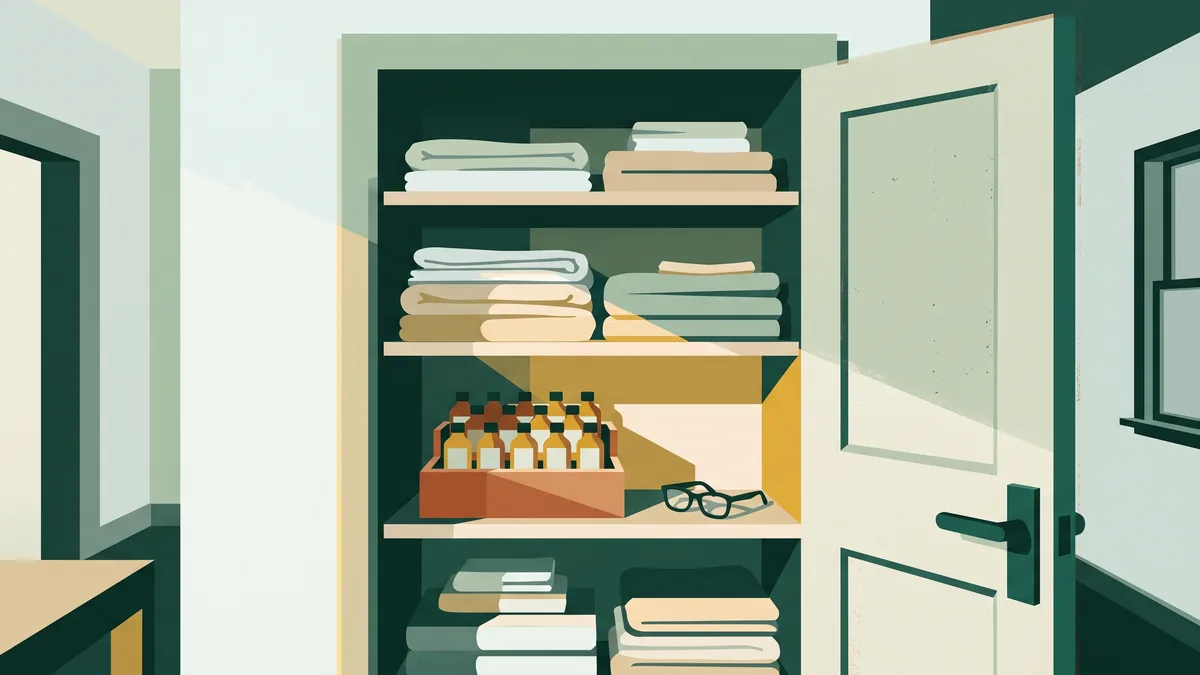
In practice that is a bedroom drawer, a linen closet, a high kitchen cabinet away from the stove, or a labeled box in any of those. Keep them in the container the pharmacy gave you — the amber bottle is tinted for a reason, and the label on it is the only place the drug name, the strength, the prescriber and the fill date all appear together.
One more consideration if grandchildren visit, or if anyone in the house is confused some days: out of sight and out of reach are two different requirements, and the second is the one that matters.
The pill organizer, honestly
A weekly organizer strips off everything described above. No amber, no desiccant, no label, and often a clear plastic lid sitting on a kitchen counter in the light.
It is still usually worth it. Missed and doubled doses are a bigger and far more common problem than a week of daylight on a tablet, and an organizer is the best tool anyone has come up with for that. Three things make it better rather than worse:
- Keep the original bottles. They are the record. Nobody can answer a question about a pill in a plastic compartment.
- Fill a week or two, not a month. Especially in summer, and especially if the organizer lives somewhere sunny.
- Keep the organizer out of the bathroom too. The same humidity applies, and more so with the lid open.
If one of your medications comes in a blister pack or a foil strip, leave it in the foil until you take it. That packaging is doing a job.
Dates, and what "expired" actually tells you
The date on the bottle is the manufacturer's guarantee through that date under proper storage. What it does not do is announce anything at a stroke of midnight.
For some medications the date is a soft boundary and for others it is firm, and which is which is not something to work out from an article or from how the tablet looks. A pharmacist can tell you in one sentence which category yours is in. Take the bottle with you; the fill date and the beyond-use date are both on the label.
What is not a good plan is keeping several years of leftovers in a drawer against a future need. That is how the wrong bottle gets picked up in a hurry.
Getting rid of the rest
Old medications should not go in the household bin where they can be found, and flushing is not the general answer either.
Take-back is the clean option, and both pharmacies and many law enforcement offices in Colorado run collection boxes. We are not going to print a list of locations and hours we have not checked this month, because the one thing worse than not knowing is driving somewhere that closed. Ask at your pharmacy counter and they will tell you where the nearest current one is, and whether they take them at the counter themselves.
While you are clearing things out, this is also the moment a medication list gets accurate for free, because you are holding every bottle in the house at once.
And the standing rule: do not stop, skip or reduce a medication on your own because of something you read, including anything on this page about storage. If you think something has been stored badly, that is a question for your pharmacist about that specific product, not a reason to go without it.
Why this is the kind of thing we write about
Haven Health Plans was started by the pharmacists at Good Day Pharmacy, which operates a network of local community pharmacies across Colorado, Wyoming and Nebraska.
None of the above is a Medicare question. It is the sort of thing you learn by standing behind a counter for years and noticing which questions keep arriving — and a surprising number of them start with a bottle that lived in a bathroom, a garage or a glove box.
We do not pick plans around pharmacies. A comparison rests on your medication list, your doctors and your budget. Your pharmacy enters the conversation when you tell us you want to keep yours.
If you are pulling every bottle out of the cupboard anyway, take the list that falls out of it to the counter and ask someone to read it. That is a better use of the afternoon than the tidying was.
This article describes Medicare's own rules and publicly available community information. It does not describe the benefits of any particular plan, and it is not medical advice: never stop or change a medication without talking to the person who prescribed it. Indexed dollar figures are 2026 figures and reset each January; figures set in statute, such as the insulin ceiling, do not. Hours, fees and schedules for the places named here change without notice, so call before you go.