
From the Pharmacy Counter
Heat, Altitude and Your Medications in Northern Colorado
Five thousand feet and dry air change how a hot afternoon works on your body, and a long list of everyday prescriptions changes it further. Which ones matter, what the warning signs look like, and six things that help.
Written for the person who intends to keep going outside, and would rather know which of their own prescriptions matters in August.
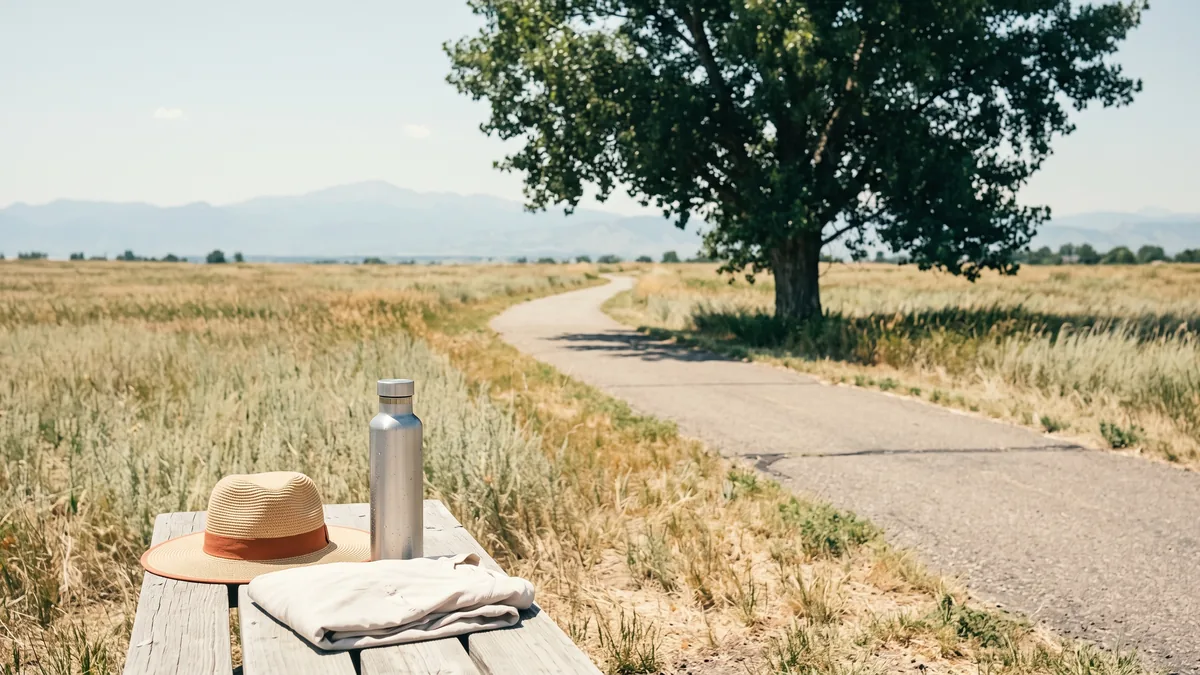
Northern Colorado sits around five thousand feet, the air is dry most of the year, and the sun at this elevation is doing more than it feels like it is doing. That combination is hard on a body in ways that do not announce themselves, and it interacts with a long list of medications that people take every single morning without a second thought.
This is not a warning to stay indoors. It is the conversation we would have with you at a counter before your first hot Saturday on a pickleball court in Greeley or a walk on the Poudre Trail in July.
None of what follows is a reason to stop taking anything. Never stop a prescription because of an article. It is a reason to know which of yours is on this list, and to talk to whoever prescribes and fills them.
Why altitude and dry air change the arithmetic
Two things happen here that do not happen at sea level.
You lose water through your lungs simply by breathing, because the air you exhale is more humid than the air you took in and the air here is very dry. You do this all day, and you do it without ever feeling thirsty, because thirst is a poor and slow signal. By the time you feel it you are already behind.
And sweat evaporates almost instantly in dry air, which is efficient cooling but means you never see it. At sea level you know you are sweating because your shirt is wet. Here you can lose a great deal of fluid and stay dry, which removes the one cue most people use to decide they have had enough.
The medications that matter most
Diuretics. Furosemide, hydrochlorothiazide, chlorthalidone, spironolactone and their relatives. Prescribed for blood pressure, for heart failure, for swelling. Their entire job is to move fluid out of you. On a hot day at altitude you are losing fluid two ways at once. This is the single most important group on this list, and if you take one, the conversation about summer water intake is one to have with your prescriber rather than to guess at, because "drink more" is not automatically right for someone on a fluid restriction.
Beta blockers. Metoprolol, atenolol, carvedilol and others. They hold your heart rate down, which is the point. The consequence in heat is that the internal signal you have relied on your whole life, the pounding chest that tells you to sit down, is muted. You can be working harder than your body can sustain and not get the usual warning. Beta blockers can also reduce blood flow to the skin, which is part of how you shed heat.
ACE inhibitors and ARBs. Lisinopril, losartan and similar. These can blunt thirst, which is exactly the wrong thing on a dry August afternoon, and they affect how your kidneys handle fluid and potassium.
Anticholinergics, which is a bigger group than the name suggests. This is the one people never see coming. Medications with drying effects reduce your ability to sweat, and sweating is your primary cooling system. The group includes oxybutynin and similar bladder medications, older antihistamines like diphenhydramine, some medications for nausea and vertigo, some for tremor, some tricyclic antidepressants, and a number of over-the-counter sleep aids, because the active ingredient in most nighttime formulas is an antihistamine. If you take a PM formula for sleep, you are taking one of these.
Antipsychotics and some antidepressants. Several interfere directly with the brain's temperature regulation. This is well documented and not widely explained to patients.
SGLT2 inhibitors. Empagliflozin, dapagliflozin and relatives, used for diabetes and increasingly for heart and kidney protection. They work partly by moving glucose and fluid out through the urine, so they carry a dehydration consideration in hot weather.
Metformin. Not a heat drug as such, but dehydration is the circumstance in which the rare serious problem with metformin becomes less rare. Sick days and very hot days are both worth a plan agreed with your prescriber in advance.
Lithium. This one deserves its own line. Lithium levels rise when you are dehydrated, and the gap between a therapeutic level and a toxic one is narrow. If you take lithium, summer is a monitoring conversation, not an article.
Anything that makes you sensitive to sun. Doxycycline and other tetracyclines, some sulfa drugs, hydrochlorothiazide, amiodarone, some fluoroquinolones, and several topical treatments. These do not affect your temperature. They mean you burn faster and worse than you expect, which at this elevation is already faster than you expect. A hat and long sleeves do more than sunscreen alone.
Statins. Muscle aches are a known effect for some people, and they are considerably harder to interpret when you have also just spent two hours on a court in the heat. Worth knowing so you do not dismiss something you should mention.
What the warning signs actually look like
Not the textbook version. The version people describe afterward.
Heat exhaustion tends to arrive as heavy fatigue that feels out of proportion, a headache, nausea, cool clammy skin, muscle cramps, and dizziness on standing. The right response is shade, fluid, and stopping, and stopping is the part people resist.
The more serious situation announces itself differently, and the distinguishing feature is confusion. Skin that has gone hot and dry after being sweaty, a body temperature that is clearly high, an unsteady walk, and someone not making sense. That is an emergency and not a rest-in-the-shade situation.
There is one detail worth holding onto: on some of the medications above, particularly beta blockers and the drying group, the early signals are quieter than they would otherwise be. A person on those medications can travel further past the point of trouble before it becomes obvious. That is the whole reason to know your own list.
Six things that actually work
- Go early or go late. In July that means before nine or after six. The trailheads on the Poudre Trail with real shade, like Island Grove in Greeley, are worth choosing over the exposed sections.
- Drink on a schedule rather than on thirst. Thirst is late here. If you are on a fluid restriction, get the number from your prescriber and hold to it rather than improvising.
- Know where the water and the bathrooms are before you start. A practical local note: Greeley's parks page states that many restroom facilities are only available from May through September, so a shoulder-season walk needs a different plan.
- Wear a hat with a brim and long light sleeves. At this elevation this beats sunscreen alone, particularly on any of the sun-sensitizing medications.
- Do not park in the sun with your medications in the car. Heat degrades a good many drugs, and inhalers and insulin especially. A closed car in a Colorado parking lot in August gets far hotter than the label allows. This applies to the bag on the way home from the pharmacy too.
- Ask before the season, not during it. Take your list to whoever fills it and ask which items on it matter in heat. Ten minutes in June is worth more than any article.
Insulin gets its own paragraph
If you use insulin, the storage rule is not a suggestion. Heat degrades it, and degraded insulin does not announce itself, it simply works less well than you are counting on. It should not sit in a hot car, a hot mailbox, or a bag in the sun on a court. If you are traveling or spending the day out, that means a cooler, not good intentions.
While we have your attention: a one-month supply of each covered insulin product costs no more than $35 under Medicare in 2026, with no deductible applied, at in-network and out-of-network pharmacies alike, no matter what tier your plan assigned it. If you are paying more than that for a month of insulin, something is wrong and it is worth a phone call this week.
Why a Medicare agency is writing about heat
Because we are pharmacists first. Haven Health was started by the pharmacists at Good Day Pharmacy, here in Northern Colorado, and this is the sort of thing we used to explain across a counter one person at a time.
We are not your prescriber and this article is not advice about your particular situation. Take your actual list to your actual pharmacist and ask the question. That is free, it takes ten minutes, and it is the single most useful thing on this page.
When Medicare is what you need, bring the same list. We will read it like pharmacists. And ask your Good Day pharmacist about us before you call anyone, including us.
This article describes Medicare's own rules and publicly available community information. It does not describe the benefits of any particular plan, and it is not medical advice: never stop or change a medication without talking to the person who prescribed it. Indexed dollar figures are 2026 figures and reset each January; figures set in statute, such as the insulin ceiling, do not. Hours, fees and schedules for the places named here change without notice, so call before you go.