
Medications and Costs
What Actually Lowers an Inhaler Bill, and Why Medicare Does Not Cap It
The widely reported $35 inhaler prices are manufacturer programs, not a Medicare benefit. Here are the four things that really set your inhaler cost, the exception process with its actual deadlines, and the nebulizer route nobody compares.
Written for anyone who saw the thirty-five dollar headlines and wants to know what is actually true.
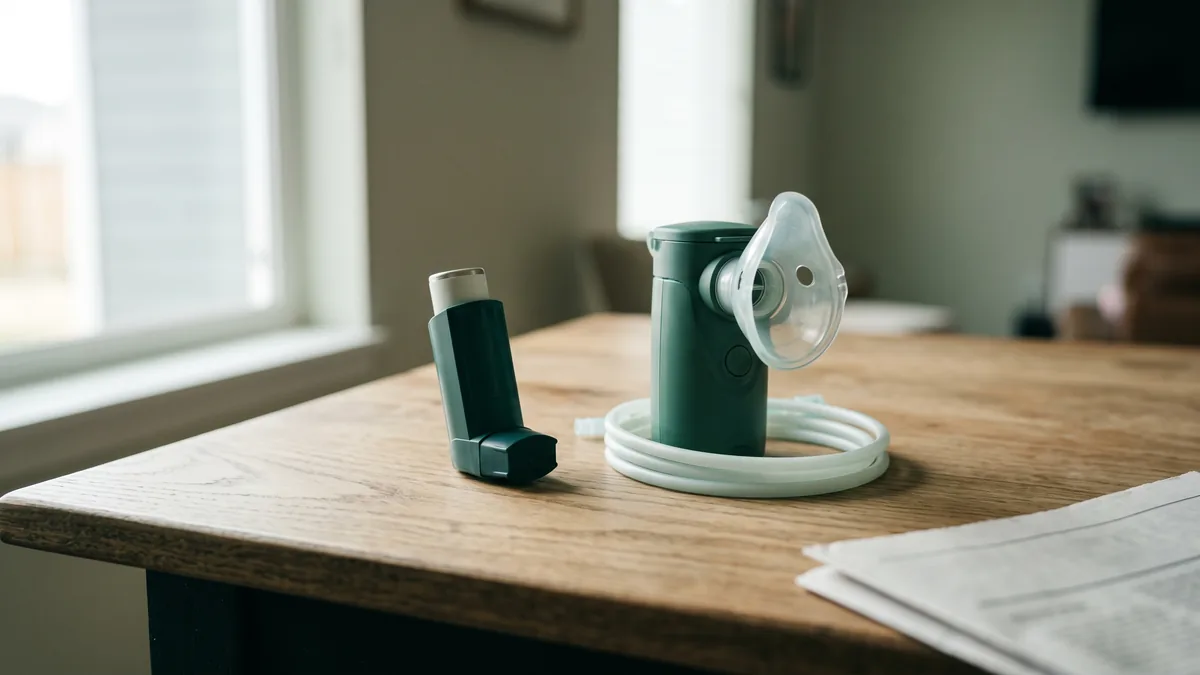
You have probably seen the headlines saying inhalers now cost thirty-five dollars. We need to be careful with that, because it is not a Medicare rule, and treating it like one is how people end up at a counter with a bill they did not plan for.
Here is the accurate version, and the four things that actually move an inhaler bill.
Medicare does not cap what an inhaler costs
We checked this carefully, because getting it wrong would mislead people about real money.
Under the Medicare drug benefit there are exactly two categories with a cost-sharing ceiling set by federal rule: covered insulin products, at no more than $35 for a one-month supply with no deductible, and adult vaccines recommended by the federal immunization advisory committee, at zero. Inhalers are in neither category. There is no Medicare page describing an inhaler cap, because there is no such benefit.
The widely reported thirty-five dollar inhaler prices are manufacturer programs. Several drug companies chose to cap what they charge for their own inhalers. Those programs are real and they help real people, and they are also entirely voluntary, specific to particular products, subject to their own eligibility rules, and able to be changed or withdrawn by the company at any time. They are not a Medicare benefit and nobody at Medicare can enforce them for you.
If a program applies to the inhaler you use, use it. Just do not build a year's budget on the assumption that Medicare guarantees it, and check the manufacturer's own page for the current terms rather than a news article from last year.
Why inhalers vary so much from plan to plan
Because respiratory drugs are not protected.
Medicare requires drug plans to cover essentially all drugs in six classes: cancer drugs, HIV and AIDS drugs, antidepressants, antipsychotics, anticonvulsants, and immunosuppressants for organ transplant. Inhalers are not on that list. Neither are cholesterol drugs, blood pressure drugs, or most of what people take every day.
Outside the protected classes, plans have considerable latitude about which specific products they put on the formulary, which tier they assign, and what conditions they attach. That is why two plans can look nearly identical on paper and differ by hundreds of dollars a year for the same person with asthma or COPD.
The four things that actually set your inhaler bill
One: the tier. Medicare's own illustration of a tier structure runs roughly tier one for most generics at the smallest copay, tier two for preferred brand-name drugs, tier three for non-preferred brand-name drugs at a higher copay, and a specialty tier at the top. Every plan draws those lines differently. Inhalers are frequently brand-name products with no true generic equivalent, and each plan decides where such a product sits in its own tier structure.
If your inhaler sits on a tier that is hurting you, there is a formal process. You or your prescriber can request a tiering exception, and the plan must grant it when it determines the non-preferred drug is medically necessary for you.
Two: prior authorization. Your prescriber may have to get the plan's approval before it covers the inhaler at all. This does not change the price. It changes whether the price applies this week or after two phone calls.
Three: step therapy. A plan can require you to try a less expensive inhaler first and have it not work well enough before it will cover the one your doctor actually wants you on. This is legal and common. It is also appealable.
Four: quantity limits. A plan can limit how much it covers over a period. For a rescue inhaler that you use more in the spring, or for someone using two devices, this is the rule that produces an unexpected cash purchase.
The exception process, with the actual clocks
This is the part almost nobody uses, and it is where the money is.
You, or your prescribing physician or other prescriber, can file a request for an exception. Your prescriber has to supply a supporting statement saying that the plan's preferred drugs either would not be as effective for you, or would have adverse effects for you, or both.
The timelines are set in regulation:
- Standard coverage determination: within 72 hours. For an exception, the 72 hours runs from when the plan receives your prescriber's supporting statement.
- Expedited coverage determination: within 24 hours, where waiting could seriously jeopardize your health.
- First-level appeal, called a redetermination, on a standard benefit request: within 7 calendar days. Expedited, within 72 hours.
If the plan still says no, there are four more levels above it: an independent review entity, an administrative law judge at the Office of Medicare Hearings and Appeals, the Medicare Appeals Council, and finally federal district court.
And a detail worth holding onto: once an exception is approved, the plan may not require you to request approval again for a refill or a new prescription, as long as your prescriber keeps prescribing it, it remains safe for you, and your enrollment period has not expired.
The nebulizer route, which almost nobody mentions
Here is a genuine alternative that lives in a different part of Medicare entirely.
Part B covers nebulizers, and some of the medications used in them, when your doctor prescribes them for use in your home. That is Medicare's durable medical equipment benefit, not your drug plan.
The economics are different in both directions, so compare honestly rather than assuming one is better:
An inhaler runs through your drug plan. You pay the tier copay, it may carry prior authorization or step therapy, and critically, what you spend counts toward the annual out-of-pocket ceiling of $2,100 in 2026, after which covered drugs cost you nothing for the rest of the year.
A nebulizer medication runs through Part B. After the Part B deductible, which is $283 in 2026, you pay 20 percent of the Medicare-approved amount, and whether the supplier accepts assignment matters a great deal. There is no annual out-of-pocket ceiling on Part B. Twenty percent of a large number is a large number, every year, forever.
For some people the nebulizer path is cheaper. For others it is considerably worse. It is also a real clinical decision, not only a financial one, and it belongs to your prescriber. But it is worth putting on the table, because the two paths are rarely compared for anyone.
The discount card trap
If an inhaler is not covered by your plan at all, a discount card can be the right answer.
If it is covered, do the arithmetic first, because Medicare says this plainly: discount cards are not creditable coverage, and when you use one instead of your Medicare plan, what you spend does not count toward your deductible or your out-of-pocket maximum.
In 2026 that maximum is $2,100, and reaching it means you pay nothing for covered drugs for the rest of the calendar year. If you are on an expensive inhaler plus other medications and you are likely to reach that ceiling, saving thirty dollars in March by going around your plan can push the date you reach the ceiling out by weeks and cost you far more than you saved.
Two related points, because most articles have these backwards. Buying at an out-of-network pharmacy through your plan does still count toward your total, including the price difference you are responsible for, so keep the receipt and submit it. And as of 2025 the rules changed so that amounts paid on your behalf by other insurance or an employer plan now do count. Anything you read written before 2025 says the opposite.
Two things worth asking the pharmacist, not the plan
We are pharmacists, so allow us the two questions that matter more than any of the above for a good many people.
Watch me use it. Inhaler technique is commonly wrong, and the person using the inhaler is usually the last to know. Wrong timing on the breath, no spacer where a spacer would help, not shaking a device that needs shaking, or simply an empty canister that still makes a noise. Ask your pharmacist to watch your technique. It takes thirty seconds and it costs nothing.
Has it been in a hot car? Heat degrades a good many medications, and inhalers are among them. A closed vehicle in a Colorado parking lot in August goes well past what the label allows. A device you have carried through two summers may be delivering less than you are counting on.
Why we wrote this
Haven Health was started by the pharmacists at Good Day Pharmacy, here in Northern Colorado. Covered is not the same as affordable, and a pharmacist knows the difference. We spent years telling people what their inhaler would cost that month, always in the month when the plan was already locked in.
This article describes Medicare's rules, not any particular plan's benefits. Every dollar figure is a 2026 figure and will change in January.
Bring your medication list, inhalers included. We will read it like pharmacists.
This article describes Medicare's own rules and publicly available community information. It does not describe the benefits of any particular plan, and it is not medical advice: never stop or change a medication without talking to the person who prescribed it. Indexed dollar figures are 2026 figures and reset each January; figures set in statute, such as the insulin ceiling, do not. Hours, fees and schedules for the places named here change without notice, so call before you go.